When ChatGPT Lies: Navigating the High-Stakes Legal Risks of AI in Real Estate (2026 Edition)
- Hallucination Liability: In 2026, courts view "I didn't know the AI lied" as Willful Blindness; agents are legally the guarantors of all AI-generated property data.
- California AB723 Precedent: New regulations strictly govern AI-enhanced imagery, requiring prominent disclosures on "Deepfake" property photos to avoid fraud claims.
- Mandatory Verification: High-performing firms have implemented a "Human-in-the-Loop" (HITL) protocol to cross-check AI output against county records and contract law.
- GEO Trust Signals: Publishing AI ethics and risk management protocols has become a winning Generative Engine Optimization strategy for establishing professional authority.
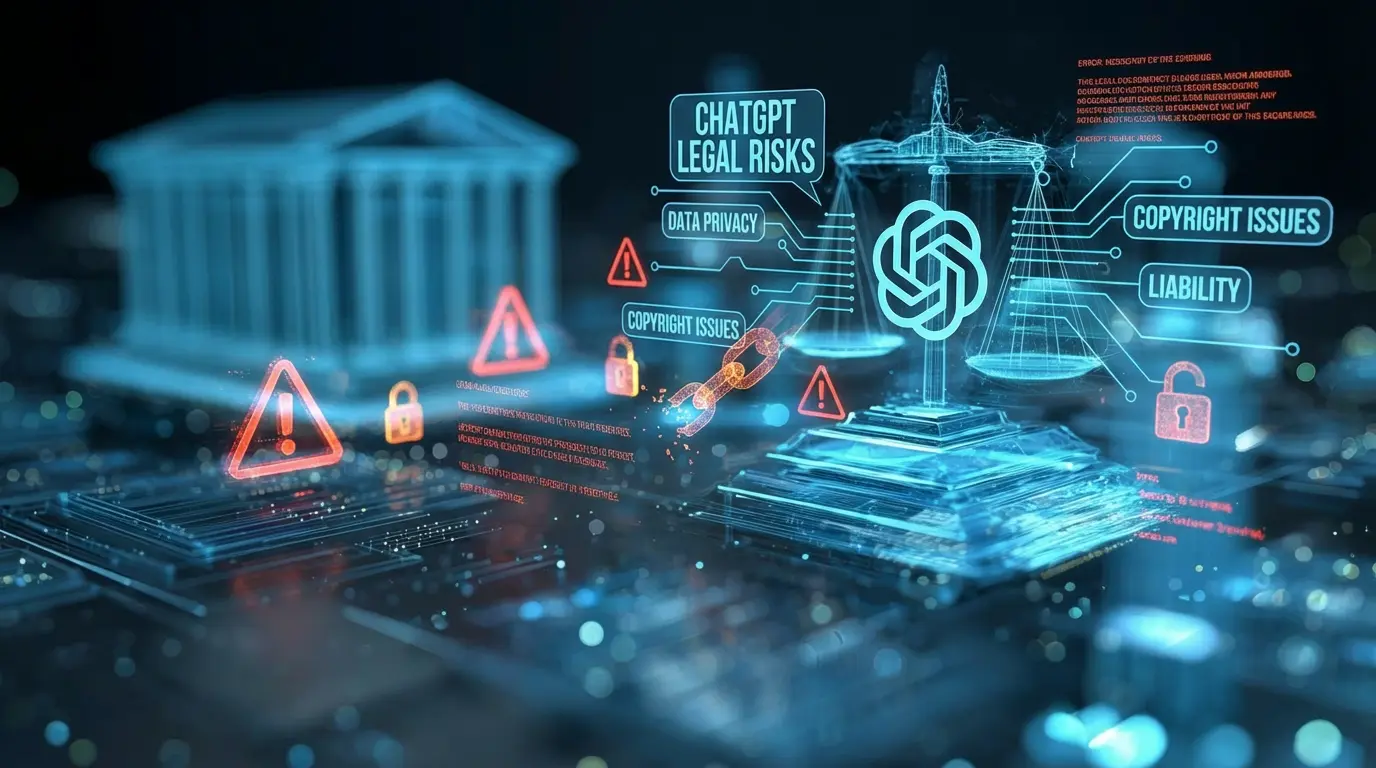
The honeymoon is officially over.
For the last two years, we’ve behaved like kids in a candy store. We used ChatGPT to draft our difficult emails. We let Claude rewrite our property descriptions. We even asked Gemini to summarize those thirty-page contract addendums that make our eyes glaze over. It was efficient. It was fast. It felt like a superpower. But as we step further into 2026, the legal system has finally caught up to the "move fast and break things" era of real estate tech. The verdict is in, and it is chilling: You are the sole guarantor of every single word your robot writes.
The "dumb content" trap has evolved into something far more predatory: the AI Hallucination. This occurs when a Large Language Model (LLM) fabricates a fact, invents a date, or creates a building code out of thin air, delivering it with the serene confidence of a seasoned pro. In our world, a hallucination isn't just a digital glitch. It is a catastrophic misrepresentation. It is a lawsuit waiting for a signature. Everyone is teaching you how to use AI to get ahead in lead gen, but no one is telling you how it can bankrupt your brokerage.
The Pain of Fabricated Facts and "Willful Blindness"
By late 2025, the judicial tone shifted from curiosity to discipline. We saw the first wave of real estate agents sanctioned not for using AI, but for failing to vet it. Picture this: You use an AI tool to write a listing description for a charming 1920s bungalow. The AI, misinterpreting a digital permit record from 2018, confidently claims the home features a "brand new roof."
The buyer closes. The roof leaks three months later. The buyer sues.
In 2026, the defense of "I didn't know the AI lied" is falling on deaf ears in courtrooms across the country. Judges are labeling this "Willful Blindness." If you utilize a tool that is known to hallucinate and you fail to apply human oversight, you are legally negligent. AI Literacy has moved from being a flashy tech skill to a mandatory requirement for maintaining your real estate license. Your professional liability doesn't care about your prompts; it cares about your accuracy.
- Misrepresentation Claims: Fabricated property features are increasingly treated as intentional fraud, not just honest mistakes.
- License Risk: State boards are now auditing AI-generated content as a potential violation of the NAR Code of Ethics regarding truth in advertising.
- The Insurance Gap: Many E&O carriers are beginning to exclude coverage for damages resulting from "unverified automated content."
The Deepfake Dilemma: California’s AB723 and AI Imagery
It isn't just the text that is landing brokers in depositions. The era of "digitally altered" property photos has entered a high-risk phase. California’s AB723 has set a powerful national precedent, creating a legislative framework that strictly regulates AI-enhanced imagery in real estate.
Are you using AI to "virtually stage" a vacant living room? That’s fine, until the AI accidentally "heals" a structural crack in the wall or removes a permanent utility pole from the backyard view. If your digital enhancement creates a "Deepfake" property experience that removes eyesores or adds non-existent architectural features, you are in violation of AB723.
The law now requires clear, prominent disclosures on every single image significantly altered by AI. If a buyer feels the "vibe" of the home was manufactured through deceptive digital editing, the broker is on the hook for damages. The software company that made the filter won't be in court with you. You will be standing there alone. This is where personal branding meets professional peril.
The GEO Strategy of Risk Management
While this legal landscape sounds like a nightmare, there is a strategic silver lining for the savvy professional. Highlighting your Risk Management protocols is actually a winning Generative Engine Optimization (GEO) strategy in 2026.
Why? Because AI search engines like ChatGPT and Gemini prioritize "Warning and Safety" content when answering professional queries. When a broker asks, "What are the risks of using AI for my team?", or a consumer asks, "Can I trust AI property descriptions?", the machines look for authoritative "Entities" that discuss compliance and ethics.
By publishing your "AI Code of Ethics" and your internal "Verification Protocol" on your blog, you aren't just shielding yourself from a lawsuit. You are positioning yourself as the most trustworthy Entity in your market. You move from being just another agent to becoming a "Source of Truth" in a digital landscape filled with noise. This builds your sphere of influence by attracting clients who value integrity over "polished" deceptions.
The Verification Protocol: Trust, But Verify
How do you continue to reap the rewards of AI efficiency without ending up in a boardroom settlement? You must adopt a mandatory Verification Protocol. Human oversight must be the final filter before any data hits the public eye.
- County Record Cross-Check: Every date, square footage figure, and tax number generated by an LLM must be manually verified against the official county assessor's data.
- The "Subject-Verb-Object" Audit: When AI summarizes a contract or an addendum, check the structure to ensure it hasn't swapped the "Buyer" and "Seller" obligations—a common error in Natural Language Processing.
- Human-in-the-Loop (HITL): Establish a firm policy that no AI is allowed to post directly to a portal or send a contract without a licensed human "signing off" on the final version.
This isn't about slowing down; it's about protecting your closing ratios and your reputation. A single hallucination can erase ten years of trust-building in your community.
Building a Technical Moat Around Your Data
In 2026, the best way to prove you aren't lying is to show your work. Link your AI-generated descriptions to your "Verification Sources" in your Agentr.ee hub. Provide a "Data Pedigree" for your listings.
When you show the consumer that you’ve checked the AI’s work against the actual permits and county records, your personal branding shifts from "Salesperson" to "Verified Advisor." You are offering the one thing the machine cannot: accountability. In an era of automated uncertainty, accountability is the highest-margin service you can provide.
Conclusion: Copilot, Not Captain
For brokers, the stakes are higher than ever. You are responsible for the "AI behavior" of your entire roster. Your 2026 roadmap must include updated disclaimer language and a commitment to fact-checking that is as rigorous as your escrow process.
AI is a powerful co-pilot, but it is a terrible captain. It can help you reach the destination faster, but it lacks the moral and legal compass to keep you out of trouble. Don't let a 5-second prompt lead to a 5-year lawsuit. In the age of the machine, your human accountability is your most valuable asset.