The Linktree Trap: Why Realtors Are Losing Leads to "Influencer" Tools (And How to Fix It)
Intro Summary (TL;DR)
- Third-party link tools divert valuable Domain Authority away from your real estate website, actively harming your local organic search rankings.
- Self-hosting your "link in bio" page allows for the integration of retargeting pixels and geographic SEO triggers that third-party platforms lack.
- Branding consistency is compromised when high-net-worth leads transition from premium social content to generic, "cookie-cutter" link templates.
- Reclaiming your digital front door involves creating a mobile-optimized /links page on your own domain to ensure 100% data ownership and lead tracking.
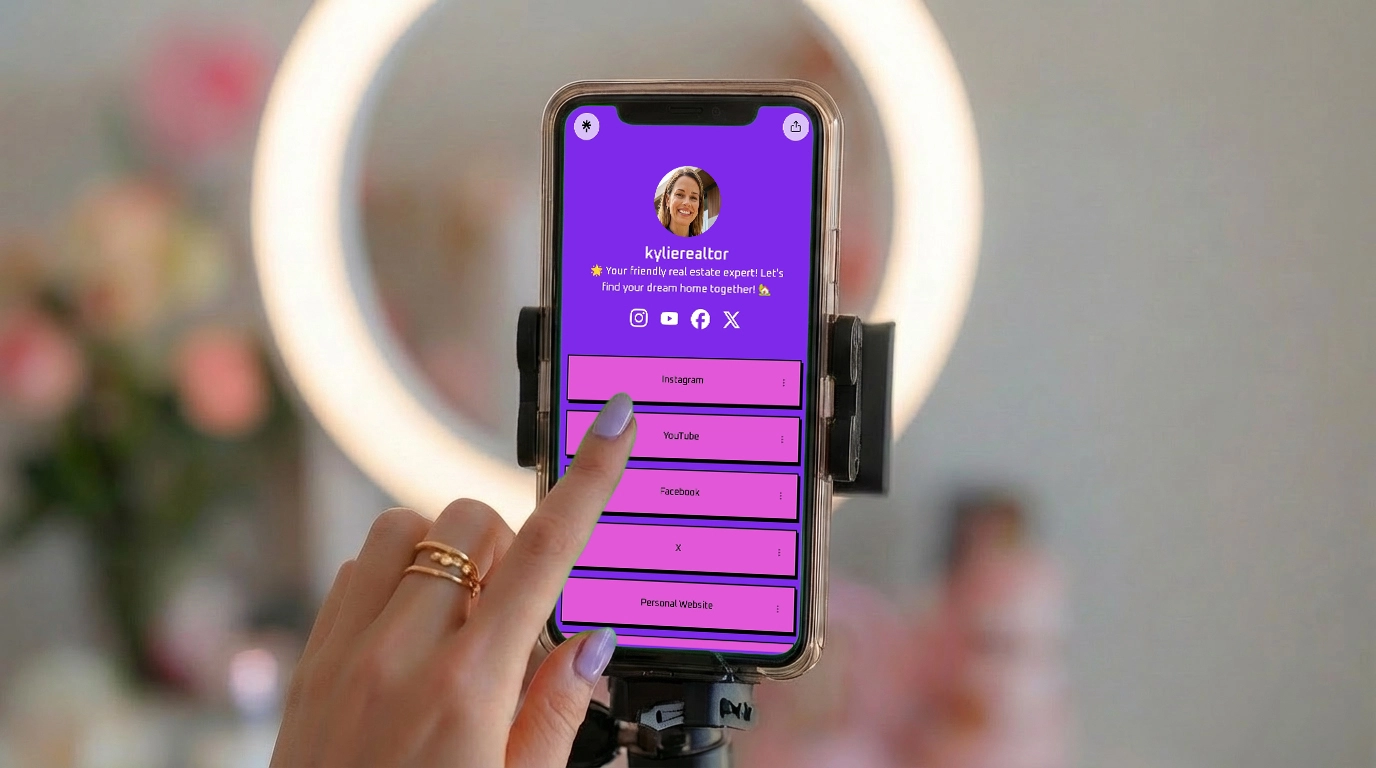
The "link in bio" is the most valuable piece of digital real estate you own. It is the narrow bridge connecting your social media hustle to your bank account. Yet, thousands of agents are handing the keys to that bridge over to a third-party service built for lifestyle influencers and podcasters.
If you are using Linktree to manage your digital presence, you aren't just making it "easier" for clients to find you. You are actively sabotaging your local SEO, diluting your brand, and letting high-intent leads slip through the cracks. In 2026, the gap between the "Top Producer" and the "Average Agent" is defined by who owns their data.
1. The SEO Sabotage: Ranking Their Site, Not Yours
Every time someone clicks a link in your Instagram or TikTok bio, they are performing a "vote" in the eyes of Google. Most agents don't realize that by using a middleman, they are participating in a massive transfer of wealth, not money, but "digital authority." You are essentially spending your time and energy building the domain authority of a multi-billion dollar tech giant instead of your own local real estate practice.
In the world of real estate lead gen, organic search is the long game. When you direct traffic to your own site, Google sees that your domain is relevant, active, and popular. This signals the algorithm to rank you higher for local searches like "Best realtor in [Your City]." By using a middleman, you are effectively invisible to the search engines that matter most.
- Domain Authority: When you use a Linktree URL, that SEO authority goes to Linktree.com.
- Invisible to Search: Organic traffic tells Google your site is relevant; without it, you're a ghost.
- The Solution: Direct traffic to your own domain to signal to Google that you are an active, authoritative local player.
2. The GEO-Tracking Fail
Real estate is a game of geography, but third-party link tools are geographically agnostic. They are built to work the same way for a teenager in London as they do for a realtor in London, Ontario. This lack of specificity is a massive missed opportunity to signal to AI search engines exactly where you operate and who you serve.
When you host your own "link in bio" page on your website, you can implement local SEO triggers that a third-party tool simply cannot match. You can have your physical office address in the footer, localized meta tags, and even scripts that show different content based on where the user is clicking from. Linktree gives you a list of buttons; a self-hosted page gives you a geographic footprint that AI engines like Gemini and ChatGPT can actually verify.
- Missing Local Signals: Linktree doesn't care if a lead is in your target zip code or three states away.
- The "Digital Footprint": Self-hosting allows for address schema and physical location tags.
- Hyper-Local Context: Use your own page to show specific neighborhood data based on user IP or location.
3. Brand Dilution: From Luxury Agent to "Just Another User"
Imagine a high-net-worth seller clicking your profile. They see your professional photography, your curated listings, and your sophisticated commentary on the market. Then, they click your bio link and land on a generic, "cookie-cutter" page with a Linktree logo at the bottom. The professional "spell" is broken.
Your brand is your promise of a premium experience. When a prospect lands on a page you don't own, the brand experience is interrupted. A self-hosted links page allows you to maintain your custom fonts, your specific color palette, and—most importantly—your URL. There is a profound psychological difference between clicking linktr.ee/agent and YourName.com/links. The latter screams "Industry Leader," while the former says "I'm using the free version."
- Continuity Matters: Brand experience shouldn't end when the user leaves Instagram.
- Control the Aesthetic: Maintain your custom design language and high-end imagery.
- Professional URL: Your own domain builds immediate trust and signals a higher level of business maturity.
4. The Lead Capture Black Hole
How many people clicked your "What’s My Home Worth?" link today but didn't fill out the form? If you’re using a third-party tool, you probably have no idea. In real estate, the fortune is in the follow-up, and you can’t follow up with someone you never tracked.
When traffic stays within your ecosystem, you can use retargeting pixels from Meta, Google, or TikTok. This means if a seller clicks your link but gets distracted by a phone call, your "Selling in 2026" ad can follow them across the internet the next day. Linktree makes this process clunky or hides it behind a premium paywall. By owning the page, you own the data, and you gain the ability to stay top-of-mind with prospects who showed interest but weren't ready to commit in that exact second.
- Retargeting Pixels: Capture the "lost" traffic and follow them with targeted ads.
- Data Ownership: Ensure 100% security and privacy for your lead data.
- Analytics Clarity: See the entire user journey in one dashboard, not a fragmented third-party report.
5. The "Influencer" vs. The "Industry Leader"
Influencers use Linktree because they are selling "attention" to various sponsors. They want to send you to an Amazon storefront, a discount code, and a YouTube channel simultaneously. They don't care about a 30-year relationship or a $50,000 commission check. You, however, are a professional advisor.
Your goal isn't just "clicks"; it’s conversions. A list of 15 buttons is a recipe for "decision paralysis." When you build your own page, you can guide the journey. You can highlight your most recent listing with a video embed, offer a direct "Book a Consult" calendar, and keep the user's session active on your site. This increases your closing ratios because the user never has to "exit" your brand to find what they need.
- Decision Paralysis: Fewer, high-intent buttons outperform a long list of generic links.
- Guide the Journey: Use your page to highlight your "Star" listing or a time-sensitive market report.
- Relational Power: Keep users on your site longer to increase trust and authority signals.
How to Reclaim Your Traffic in 10 Minutes
You don’t need a developer or a massive budget to fix this. Reclaiming your digital front door is a simple technical shift that pays dividends for years:
- Create a Blank Page: Add a new page on your site called /connect or /links.
- Add 4-5 High-Value Buttons: Keep it simple: "Search Homes," "Instant Valuation," "Client Testimonials," and "Book a Call."
- Optimize for Mobile: Ensure the buttons are "thumb-friendly" and the page loads in under two seconds.
- Update Your Bio: Replace that Linktree link with your own domain URL.
Conclusion: Reclaim Your Digital Front Door
The convenience of a "ready-made" link tool is a trap that trades long-term authority for a few minutes of setup time. In 2026, the most successful brokers will be those who operate like media companies. Media companies don't send their audience to someone else's platform to find their content; they keep them on the "owned" property. Every click is a data point. Every visit is an SEO signal. Stop giving those gifts away to a platform that doesn't know your neighborhood, doesn't know your clients, and definitely won't help you win a listing presentation. Build your own links page today, reclaim your SEO signals, and ensure that every click in your bio is an investment in your own brand’s future—not someone else's.