The "Silent" Shift: Why Voice Search Optimization (VSO) is the Winner-Take-All Crisis of 2026 Real Estate
##Intro Summary (TL;DR)
- The Winner-Take-All Stakes: Unlike traditional search, Voice Search Optimization (VSO) provides only a single answer, making anything below the #1 spot functionally non-existent.
- NLP Integration: Agents must pivot to Natural Language Processing (NLP) by answering high-intent local queries in concise, 30-word conversational blocks.
- Technical Dominance: Securing Position Zero requires "Speakable" Schema markup and extreme site speeds to be selected as the definitive AI script.
- Zero-Friction Conversion: VSO-driven leads favor agents with streamlined mobile hubs, like Agentr.ee, that capture intent the moment the voice assistant stops speaking.
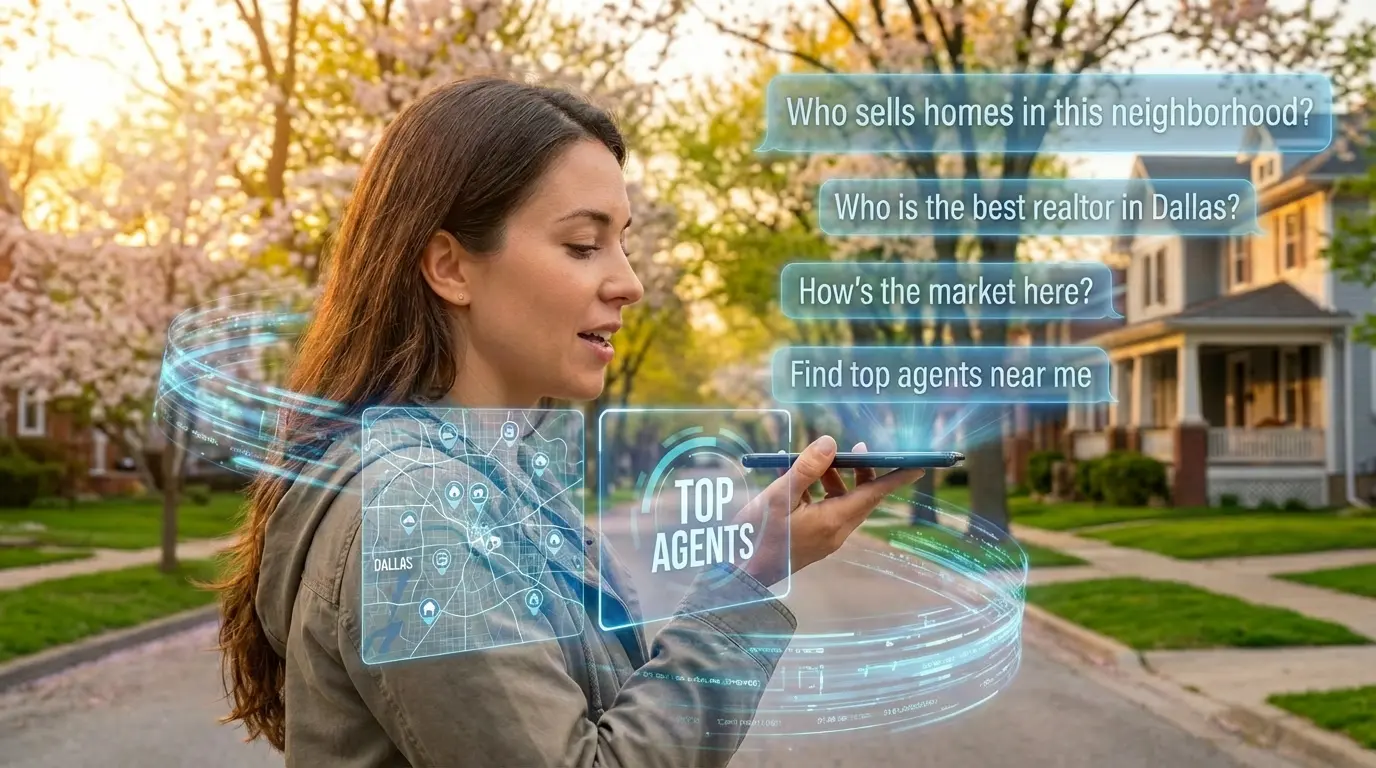
If your lead generation pipeline has gone quiet, it’s not just a random problem. It’s a sign of something bigger.Imagine a homebuyer driving through your main neighborhood. Instead of stopping to search online, they ask their car, "Siri, who is the best realtor for luxury lofts here?" In 2024, Siri might have listed a few names. But in 2026, Siri gives just one name, one bio, and one phone number.If Siri doesn’t say your name, you haven’t just missed out on second place—you’re invisible.This is the "Silent" Shift. While everyone has focused on Generative Engine Optimization (GEO), Voice Search Optimization (VSO) has quietly changed the rules for local success. Now, it’s not about being on "Page One"—it’s about being the only answer. With voice search, there’s no second place. You’re either the answer or you’re out.
The NLP Revolution: Ending Robotic Marketing Language
Why does the AI bypass your beautifully written "About Me" page? Because it’s written in "Robot-Marketing-Speak."For years, we filled our websites with keywords, writing for search engines instead of people. But voice assistants use Natural Language Processing (NLP). They want conversational answers, not just a list of keywords. When buyers ask detailed questions, AI looks for the clearest, most natural response.If your blog post begins with "In the dynamic world of the local housing market...", AI will skip it. It wants quick, direct answers. To succeed with VSO, write short, clear responses—like a script for a news anchor. If your content isn’t punchy and easy to say out loud, you’ll lose voice search leads.
The Winner-Take-All Problem
Have you ever wondered why your sphere of influence seems to be shrinking despite your high social media engagement? It’s because the point of discovery has moved to a single-channel output.Voice search creates a high-stakes bottleneck. When a user asks Alexa for the "top-rated real estate agent near me," they are usually in a high-intent state of mind. They want to take action now. In traditional SEO, being #3 was "good enough" to get a portion of the traffic. In 2026, the #1 result gets 100% of the voice lead, and #2 gets 0%.This is the winner-take-all challenge. To stay relevant, you need to stop being a generalist and become the go-to expert for specific, detailed questions. You’re not just an agent—you’re the answer to questions like, "Which realtor knows the most about the upcoming school boundary shifts in Oakwood?" If you provide the best answer, you win the voice search.
Technical Edge: Using "Speakable" Schema and Fast Loading
Content is the soul of VSO, but technical infrastructure is the skeleton. You can write the most brilliant conversational answers in the world, but if your website takes three seconds to load, the AI will skip you.Voice assistants are programmed for speed. They need to deliver the answer before the user loses patience. If your site is bloated with heavy scripts and slow-loading brokerage widgets, you are disqualified before the race starts. This is why many top producers have moved their "Digital Front Door" to high-speed hubs like Agentr.ee. You need a platform that is optimized for instant delivery.Beyond speed, you must implement "Speakable" Schema markup. This is a specific piece of code that tells the AI: "Hey,Speed isn’t enough—you also need to use "Speakable" Schema markup. This code tells AI which part of your content is best to read aloud. It’s like highlighting your best skills for an interview. If you don’t do this, AI may pick your competitor’s site instead because their content is easier to use.om "Voice to Visit" must be seamless.The user says: "Siri, send me that agent's info." Siri drops a link to your mobile hub. If that link leads to a generic homepage, the lead dies on the vine. You need a "Zero-Friction" landing zone. Your Agentr.ee bio link should be the destination—a place where the user can instantly tap to call, book, or see the specific neighborhood data they were just asking about.This is how you turn a "near me" search into a signed contract. You catch the lead at the perfect moment, giving them the answer, showing your expertise, and making it easy to take the next step—all through voice search.
VSO: The Best Tool for Personal Branding
VSO isn’t just a technical trick—it’s a powerful way to build your personal brand. When a voice assistant says your name, it feels like a trusted recommendation, not just an ad.Imagine the authority you command when a prospect’s own phone tells them you are the neighborhood specialist. That is a level of trust that no postcard or billboard can buy. By winning the VSO battle, you are effectively "vetting" yourself in the mind of the consumer before you ever speak a word to them. You are no longer just another agent; you are the one the machine trusts.
Conclusion: Don't Be Silenced
The shift from "Typing" to "Talking" isn't coming; it's here. In 2026, over 50% of local searches are performed on mobile devices, often through voice. The agents who ignore VSO are literally being silenced by the algorithm. The agents who adapt are having their names spoken in cars, kitchens, and living rooms across the city. They are becoming the voice of authority before the prospect even reaches their destination. Is your business ready to speak up, or are you comfortable being the "Result #2" that no one ever hears?